Posts: 668
Threads: 0
Joined: Feb 2017
Reputation:
26
(02-02-2018, 08:51 PM)Canard Wrote: (02-02-2018, 02:41 PM)KevinT Wrote: The signals at Bearinger Rd worked perfectly but the ones at the Quiet Pl and Old Albert St pedestrian crossings still clearly needed some tuning.
I generally very much appreciate that "things are hard", and am usually the first to hold up my hand and stop people from being negative toward crews and so on. I work in automation, and design complex, million+ dollar systems for cleanrooms with 20+ servos and hundreds of sensors.
...but I absolutely cannot fathom why it is so hard to get railway signals to work properly. Why is this so hard?!!?! IT'S ONE INPUT.
Our Grade crossing signals i don't think are single input. There's 4 different types of track circuits that could have been implemented on the line:
Quote:Project Agreement Schedule 15-2 Article 8 Train Control Systems
8.15 Track Circuits
(a) Track circuits, which are capable of operating in dc electrified territory without interference from the LRV propulsion system or high power lines, shall be utilized in signaled areas for LRT and freight railroad vehicle detection. Track circuits shall be capable of operating in the vicinity of high voltage lines that are overhead or buried close to the LRT tracks. Track circuit types shall include:
(i) Audio frequency overlays for crossing warning systems, if applicable.
(ii) Double-rail power frequency circuits for all main line crossovers and turnouts.
(iii) Single-rail power frequency circuits in selected areas and within crossovers.
(iv) Microprocessor based digital track circuits
Posts: 6,905
Threads: 32
Joined: Oct 2014
Reputation:
224
02-03-2018, 12:29 AM
(This post was last modified: 02-03-2018, 12:31 AM by Canard.)
Still, this is simple stuff.
I don’t think most people realize we’re not even at the LRV testing phase - we’re still just commissioning TPSS’ and signals and so on, using an LRV to do so, to validate the line so that true LRV performance testing can begin.
If we said tomorrow “ok Bombardier, go ahead and ship the trains you’re now storing for us”, we’re ~22 weeks away from receiving the last vehicle.
Posts: 2,015
Threads: 11
Joined: Oct 2014
Reputation:
77
Another tent popped up across from the existing one outside Famoso Pizza in uptown; basically both ends of the curve:
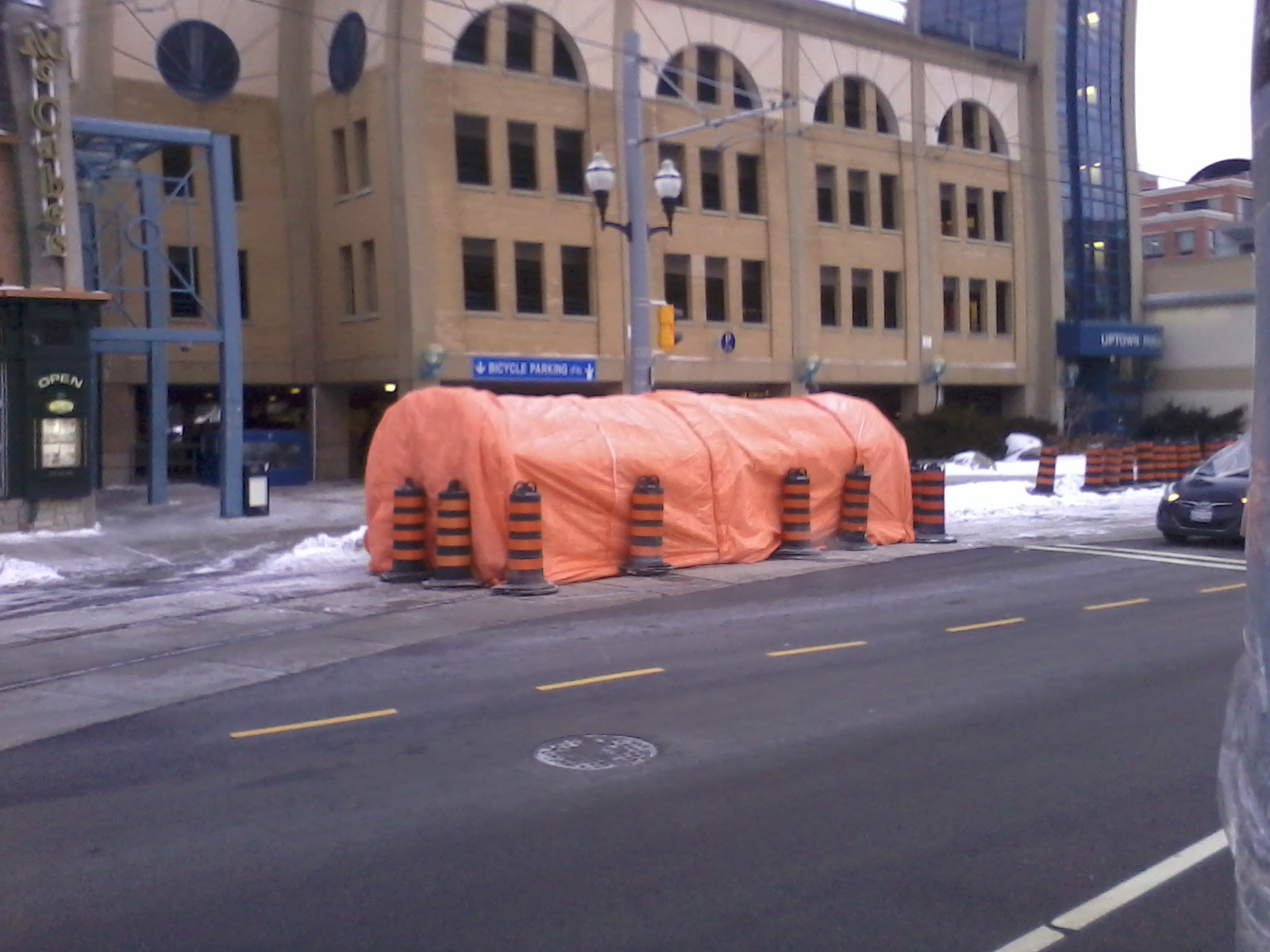
Everyone move to the back of the bus and we all get home faster.
Posts: 6,905
Threads: 32
Joined: Oct 2014
Reputation:
224
Posts: 668
Threads: 0
Joined: Feb 2017
Reputation:
26
(02-03-2018, 12:29 AM)Canard Wrote: Still, this is simple stuff.
I don’t think most people realize we’re not even at the LRV testing phase - we’re still just commissioning TPSS’ and signals and so on, using an LRV to do so, to validate the line so that true LRV performance testing can begin.
If we said tomorrow “ok Bombardier, go ahead and ship the trains you’re now storing for us”, we’re ~22 weeks away from receiving the last vehicle.
They do have more than one flat car available for delivery...
Posts: 6,686
Threads: 38
Joined: Aug 2014
Reputation:
117
(02-03-2018, 12:29 AM)Canard Wrote: Still, this is simple stuff.
I don’t think most people realize we’re not even at the LRV testing phase - we’re still just commissioning TPSS’ and signals and so on, using an LRV to do so, to validate the line so that true LRV performance testing can begin.
If we said tomorrow “ok Bombardier, go ahead and ship the trains you’re now storing for us”, we’re ~22 weeks away from receiving the last vehicle.
What difference does it make if finished trains are stored by Bombardier vs storing them in the Ion train shed?
Posts: 6,905
Threads: 32
Joined: Oct 2014
Reputation:
224
02-03-2018, 11:39 AM
(This post was last modified: 02-03-2018, 11:40 AM by Canard.)
About 22 weeks of delivery time.
There is liability on the Region is something happens to them here before they sign off on them. Bombardier has to sign off on everything they are doing (they didn’t like the first proposal for a pull-through setup, so that is what caused that highly-publicized delay on the first tug). So, legally, that’s why they’re sitting in Kingston.
But the delay caused by delivery logistics is a fixed thing that keeps floating further and further out.
Posts: 10,807
Threads: 67
Joined: Sep 2014
Reputation:
385
Moved the affordable housing discussion its own thread:
http://www.waterlooregionconnected.com/s...p?tid=1145
Posts: 608
Threads: 0
Joined: Nov 2016
Reputation:
79
(02-02-2018, 08:51 PM)Canard Wrote: (02-02-2018, 02:41 PM)KevinT Wrote: The signals at Bearinger Rd worked perfectly but the ones at the Quiet Pl and Old Albert St pedestrian crossings still clearly needed some tuning.
I generally very much appreciate that "things are hard", and am usually the first to hold up my hand and stop people from being negative toward crews and so on. I work in automation, and design complex, million+ dollar systems for cleanrooms with 20+ servos and hundreds of sensors.
...but I absolutely cannot fathom why it is so hard to get railway signals to work properly. Why is this so hard?!!?! IT'S ONE INPUT.
I suspect it's at least 6 inputs, 4 of which are analog.
For each track (northbound and southbound) that crosses a road there would be a basic 'are the rails shorted together' circuit in the immediate area of the road and sidewalks to tell the system when the crossing is occupied (digital input), and an analog approach circuit on either side for a predictor to detect not only when a train is coming, but how fast it's closing in. Each of the analog sections would need to be tuned, tested, then tuned and tested some more to get everything dialed in just right.
Even the 'digital' inputs are actually analog, because they have to use AC frequencies for detection because of the DC traction power return in the rails. Each of these AC signalling currents must be isolated from the DC currents, and detuned from the AC noise generated by the motor controllers in the Ion vehicles. I could easily see that taking a lot of tweaking, multiplied by X number of crossings, plus integration with the signalling and detection systems that direct the train movements themselves.
If anything, it's fiendishly complex (although should be at least somewhat familiar to the partners that make up GrandLinq as they've already done this in other parts of the world). 
...K
Posts: 2,004
Threads: 7
Joined: Sep 2014
Reputation:
125
Why couldn't one rail be the ground for both the Traction Power and a DC track circuit?
Posts: 668
Threads: 0
Joined: Feb 2017
Reputation:
26
(02-05-2018, 05:54 PM)jamincan Wrote: Why couldn't one rail be the ground for both the Traction Power and a DC track circuit?
track circuits can't be on the same ground as Traction Power.
Posts: 2,004
Threads: 7
Joined: Sep 2014
Reputation:
125
(02-05-2018, 08:04 PM)trainspotter139 Wrote: (02-05-2018, 05:54 PM)jamincan Wrote: Why couldn't one rail be the ground for both the Traction Power and a DC track circuit?
track circuits can't be on the same ground as Traction Power.
Isn't a ground a ground? Why can't they share a ground?
Posts: 6,905
Threads: 32
Joined: Oct 2014
Reputation:
224
Gah, that is so not how I would have done it... but then again, I'm thinking of it from an industrial automation perspective. 
I literally screamed while we were driving along Caroline SB last night at William. The Aspect Signal went haywire (flashing vertical bar?!) and the "NO RIGHT TURN/TRAIN!!!!!!!!!!!" signs started flashing like mad. It totally caught me off guard - after thinking about it, and the conditions of the road (not clear), I believe the car in front of us must have been too far off to the right, and triggered an inductive loop in the rapidway and made the signals go nuts.
Posts: 4,476
Threads: 1
Joined: May 2015
Reputation:
208
Not sure where the original discussion was, but this is an OK thread for an update: I was pleased to notice this evening that the operation of the signal on King at the Spur Line has been corrected. When the pedestrian signal to cross King is activated, the LRT no longer gets a proceed signal, and the pedestrian signal along the sidewalk remains on the walking person indication. I’d love to know the details of (a) how it got set up wrong in the first place, and (b) exactly what had to be done to fix it. But regardless, it seems somebody is looking out for minor issues and corrections are still being made.
I’ll be interested to see if pedestrians will always get a walking person to cross King when the LRT comes, even if the button has not been pressed.
Posts: 7,987
Threads: 39
Joined: Jun 2016
Reputation:
213
(02-05-2018, 10:43 PM)ijmorlan Wrote: Not sure where the original discussion was, but this is an OK thread for an update: I was pleased to notice this evening that the operation of the signal on King at the Spur Line has been corrected. When the pedestrian signal to cross King is activated, the LRT no longer gets a proceed signal, and the pedestrian signal along the sidewalk remains on the walking person indication. I’d love to know the details of (a) how it got set up wrong in the first place, and (b) exactly what had to be done to fix it. But regardless, it seems somebody is looking out for minor issues and corrections are still being made.
I’ll be interested to see if pedestrians will always get a walking person to cross King when the LRT comes, even if the button has not been pressed.
Well thank goodness for that. I would also like to know (a)....it was basically training people to ignore crossings.
The light at Moore is similarly broken.
|



