


11-14-2025, 10:15 PM
The city of Kitchener has now released the draft Official Plan update. The overall plan is similar to the Preferred Option Map that I posted originally with some very minor tweaks including the enlargement of some growth areas. Primary intensification will be within PMTSAs however there will be additional growth clusters in new Urban Centre's located at Strasburg and Block Line, Ottawa and River, Strasburg and Blair Creek (subdivision in design for Activa), and Highland and Fischer-Hallman.
The city will look at ways to use waste heat from industrial facilities to provide district energy systems to various areas of the city, similar to Toronto's Enwave. Excess heat from the Kitchener WWTP to provide heating to the Sportsworld PMTSA. Excess heat from the Ardelt, Trillium and Huron business parks to the Fairway PMTSA and Block Line Urban Centre and excess heat from the Victoria Street corridor to feed the PMTSAs to the west of Kitchener Market (Central Station area).
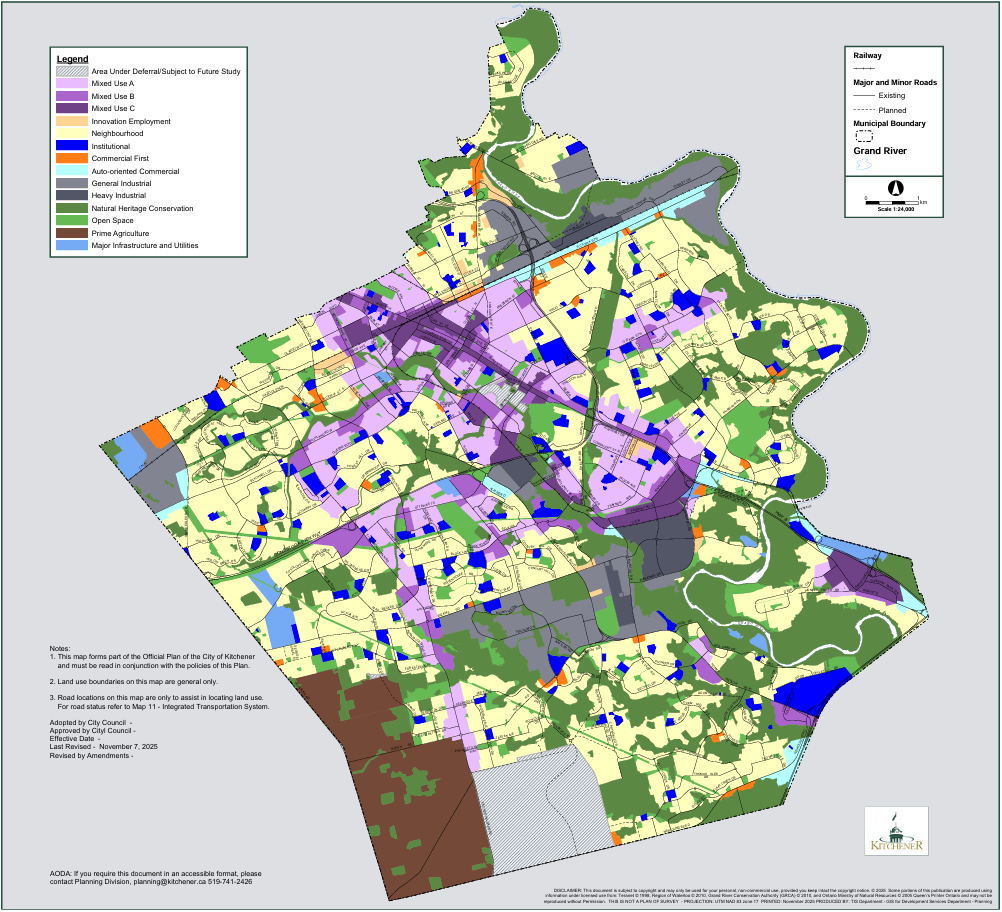
New Land Use Designations are below, they generally replace the previous designations of low, mid and high rise residential, commercial and commercial campus.
Mixed Use A
This is the same Mixed Use A zone that was implemented in Growing Together just applied to significant parts of the city. Minimum FSR of 0.6, maximum building height of 8 floors. Generally the location of this zone is within existing, predominantly low rise neighborhoods close to the LRT or Frequent Transit Network (FTN).
Mixed Use B
This is the same Mixed Use B from Growing Together, again applied to larger parts of the city. Minimum FSR of 1.0, maximum building height of 28 floors.
Mixed Use C
Same as Growing Together, unlimited height, Minimum FSR of 2.0.
Neighborhoods
Residential areas of the city not covered under Mixed Use A-C, the maximum building height allowed will be 6 floors, commercial uses will be allowed including restaurants, retail, offices, personal services and institutional.
Commercial First
This zone replaces much of the previous commercial zones within the old OP. Minimum FSR of 1.0, maximum building height of 12 floors. The primary focus is on commercial space such as grocery stores, however secondary uses such as residential, institutional and office will be allowed providing it conforms to various restrictions as mentioned in the draft OP.
Auto Orientated Commercial
Replaces more of the commercial zones within the OP, these zones are in areas where building a compact environment is difficult due to vehicular volumes, truck traffic, and poor pedestrian focus (Victoria St, areas of King St outside of the Sportsworld PMTSA). Residential is not allowed.
Innovation Employment
Within various areas of the city where there are some compatibility concerns with residential uses as such they can not be standard industrial, this includes thing such as light manufacturing, some offices, warehousing, cultural facilities etc.
Overall those are the biggest changes to the designations. The map of the designations is attached at the end of this summary.
Important Note:
The policies mentioned above are just general policies that are being applied to areas of the city. The exact breakdown of what is legally allowed to be built will be determined through a zoning bylaw update (implementation bylaw) at a later date. As such areas that are in Mixed Use B may not all be allowed to have 28 floor buildings, some may be limited to 10 floors (SGA-2) while others may allow 28 (SGA-3), it depends on the various built form regulations the city applies to properties and the justification behind it. However these have yet to be determined as the OP hasn't passed council yet, once it passes council then the zoning will be drawn up. The OP is only a guiding policy document not firm rules (zoning). Similarly parking can not be explicitly regulated through the OP however there are numerous mentions throughout the Draft OP that through the future implementation bylaws the amount of parking will be limited (maximums?), and the orientation will be regulated (buildings will face the public realm, parking will be behind, underground, generally out of view of pedestrians/cyclists).
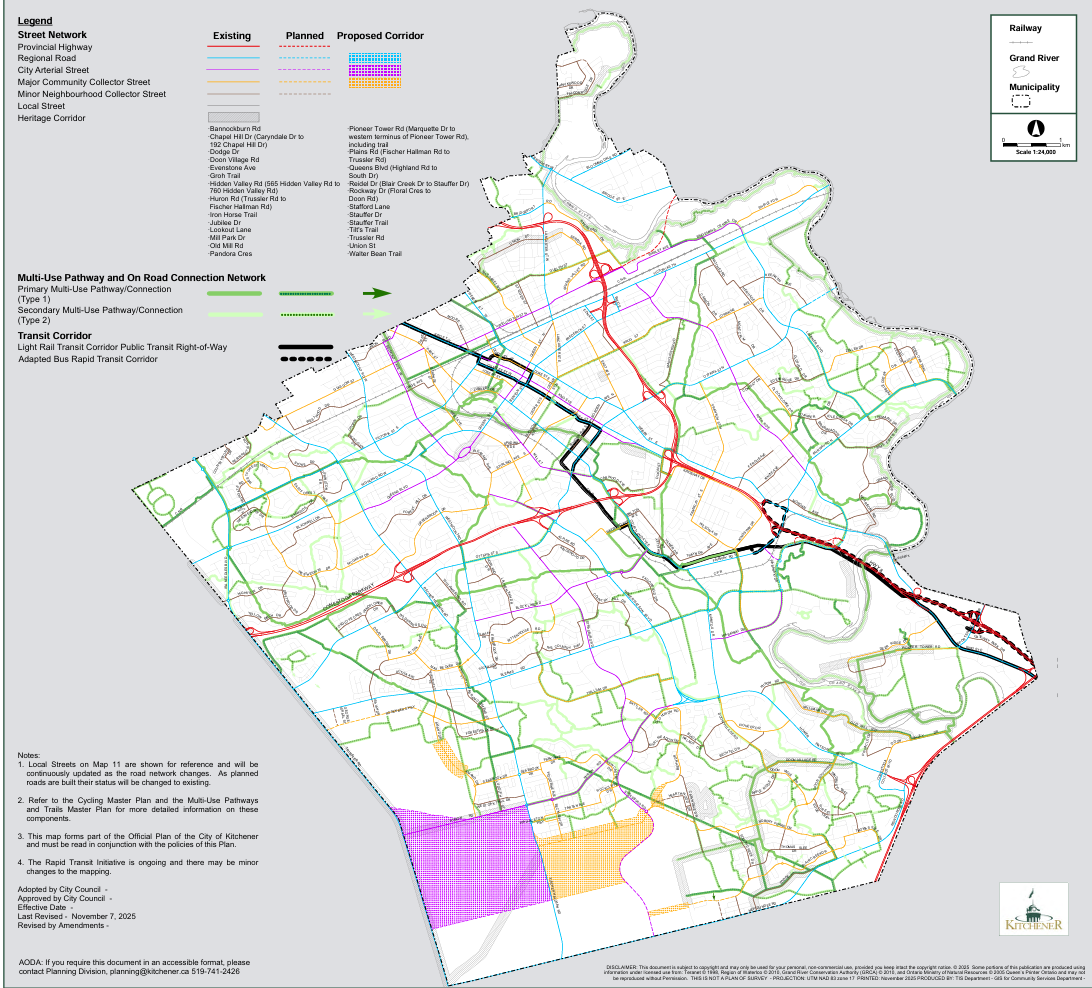
The city also significantly pushes the use of active and public transit through the OP, there are many policies throughout that are intended to make life easier for users of active and public transit, including built form regulations for buildings and parking lots. The city has also included a map with current and future active transit improvements throughout the city to really develop a comprehensive network. They also explicitly mention grade separation of streets or closure of streets at rail crossings to increase safety and will work with partners to do so (Lancaster, Bingemans Centre and Park St are the big ones to grade separate).
There are other interesting bits and pieces throughout the document (it's over 200 pages) that some might find interesting including things like well head protection, heritage, and implementation policies, however the ones that the vast majority of people will experience within their day to day lives have been mentioned, another thing to note is that the city will allow Strategic Growth Areas (Mixed A-C areas) to be expanded into other areas, including areas with Neighborhood designations (unheard of in most OPs), provided the following conditions as described in Section 12.32 area met.
Complete Draft OP: DSD_PLAN_Kitchener_2051_Draft_Official_Plan_11.13.2025.pdf
Summary of the OP (from the city, not technical in nature): Kitchener 2051 Draft Official Plan Summary
Map 3: Land Use (This is a screenshot so it isn't the best quality, higher quality can be found on page 229/244 in the draft OP)
Map 11: Integrated Transportation System (This is a screenshot it is not good quality, higher quality can be found on page 237/244 in the draft OP)
The city will look at ways to use waste heat from industrial facilities to provide district energy systems to various areas of the city, similar to Toronto's Enwave. Excess heat from the Kitchener WWTP to provide heating to the Sportsworld PMTSA. Excess heat from the Ardelt, Trillium and Huron business parks to the Fairway PMTSA and Block Line Urban Centre and excess heat from the Victoria Street corridor to feed the PMTSAs to the west of Kitchener Market (Central Station area).
New Land Use Designations are below, they generally replace the previous designations of low, mid and high rise residential, commercial and commercial campus.
Mixed Use A
This is the same Mixed Use A zone that was implemented in Growing Together just applied to significant parts of the city. Minimum FSR of 0.6, maximum building height of 8 floors. Generally the location of this zone is within existing, predominantly low rise neighborhoods close to the LRT or Frequent Transit Network (FTN).
Mixed Use B
This is the same Mixed Use B from Growing Together, again applied to larger parts of the city. Minimum FSR of 1.0, maximum building height of 28 floors.
Mixed Use C
Same as Growing Together, unlimited height, Minimum FSR of 2.0.
Neighborhoods
Residential areas of the city not covered under Mixed Use A-C, the maximum building height allowed will be 6 floors, commercial uses will be allowed including restaurants, retail, offices, personal services and institutional.
Commercial First
This zone replaces much of the previous commercial zones within the old OP. Minimum FSR of 1.0, maximum building height of 12 floors. The primary focus is on commercial space such as grocery stores, however secondary uses such as residential, institutional and office will be allowed providing it conforms to various restrictions as mentioned in the draft OP.
Auto Orientated Commercial
Replaces more of the commercial zones within the OP, these zones are in areas where building a compact environment is difficult due to vehicular volumes, truck traffic, and poor pedestrian focus (Victoria St, areas of King St outside of the Sportsworld PMTSA). Residential is not allowed.
Innovation Employment
Within various areas of the city where there are some compatibility concerns with residential uses as such they can not be standard industrial, this includes thing such as light manufacturing, some offices, warehousing, cultural facilities etc.
Overall those are the biggest changes to the designations. The map of the designations is attached at the end of this summary.
Important Note:
The policies mentioned above are just general policies that are being applied to areas of the city. The exact breakdown of what is legally allowed to be built will be determined through a zoning bylaw update (implementation bylaw) at a later date. As such areas that are in Mixed Use B may not all be allowed to have 28 floor buildings, some may be limited to 10 floors (SGA-2) while others may allow 28 (SGA-3), it depends on the various built form regulations the city applies to properties and the justification behind it. However these have yet to be determined as the OP hasn't passed council yet, once it passes council then the zoning will be drawn up. The OP is only a guiding policy document not firm rules (zoning). Similarly parking can not be explicitly regulated through the OP however there are numerous mentions throughout the Draft OP that through the future implementation bylaws the amount of parking will be limited (maximums?), and the orientation will be regulated (buildings will face the public realm, parking will be behind, underground, generally out of view of pedestrians/cyclists).
The city also significantly pushes the use of active and public transit through the OP, there are many policies throughout that are intended to make life easier for users of active and public transit, including built form regulations for buildings and parking lots. The city has also included a map with current and future active transit improvements throughout the city to really develop a comprehensive network. They also explicitly mention grade separation of streets or closure of streets at rail crossings to increase safety and will work with partners to do so (Lancaster, Bingemans Centre and Park St are the big ones to grade separate).
There are other interesting bits and pieces throughout the document (it's over 200 pages) that some might find interesting including things like well head protection, heritage, and implementation policies, however the ones that the vast majority of people will experience within their day to day lives have been mentioned, another thing to note is that the city will allow Strategic Growth Areas (Mixed A-C areas) to be expanded into other areas, including areas with Neighborhood designations (unheard of in most OPs), provided the following conditions as described in Section 12.32 area met.
- Immediate adjacency to an existing Strategic Growth Area
- Consolidation of properties that enables the proposed development
- Compliance with Strategic Growth Area land use policies and implementing by-laws, as required
- 800m from an ION station or 400m to the existing or proposed Grand River Transit Frequent Transit Network
- 400m proximity to a minimum of three of the following: Spine Network as identified in the Cycling and Trails Master Plan, Existing or proposed food store, Urban Centre, Existing or proposed community recreation facility.
- Compliance with all other policies of this Plan, and other applicable regulations and guidelines
- How the expansion advances the Big Ideas and objectives of this Plan.
Complete Draft OP: DSD_PLAN_Kitchener_2051_Draft_Official_Plan_11.13.2025.pdf
Summary of the OP (from the city, not technical in nature): Kitchener 2051 Draft Official Plan Summary
Map 3: Land Use (This is a screenshot so it isn't the best quality, higher quality can be found on page 229/244 in the draft OP)
Map 11: Integrated Transportation System (This is a screenshot it is not good quality, higher quality can be found on page 237/244 in the draft OP)